

Dear Mama,
I hope you are having a wonderful week. This past week, we went through a snowstorm, and although we were fine, it threw me off. I felt very discombobulated. That said, I’m back at my computer, happy to share with you some tips on planning out your week.
Let me know if you have any questions regarding planning or notebooking.
Warmly,
Mirley
Plan Out Your Week
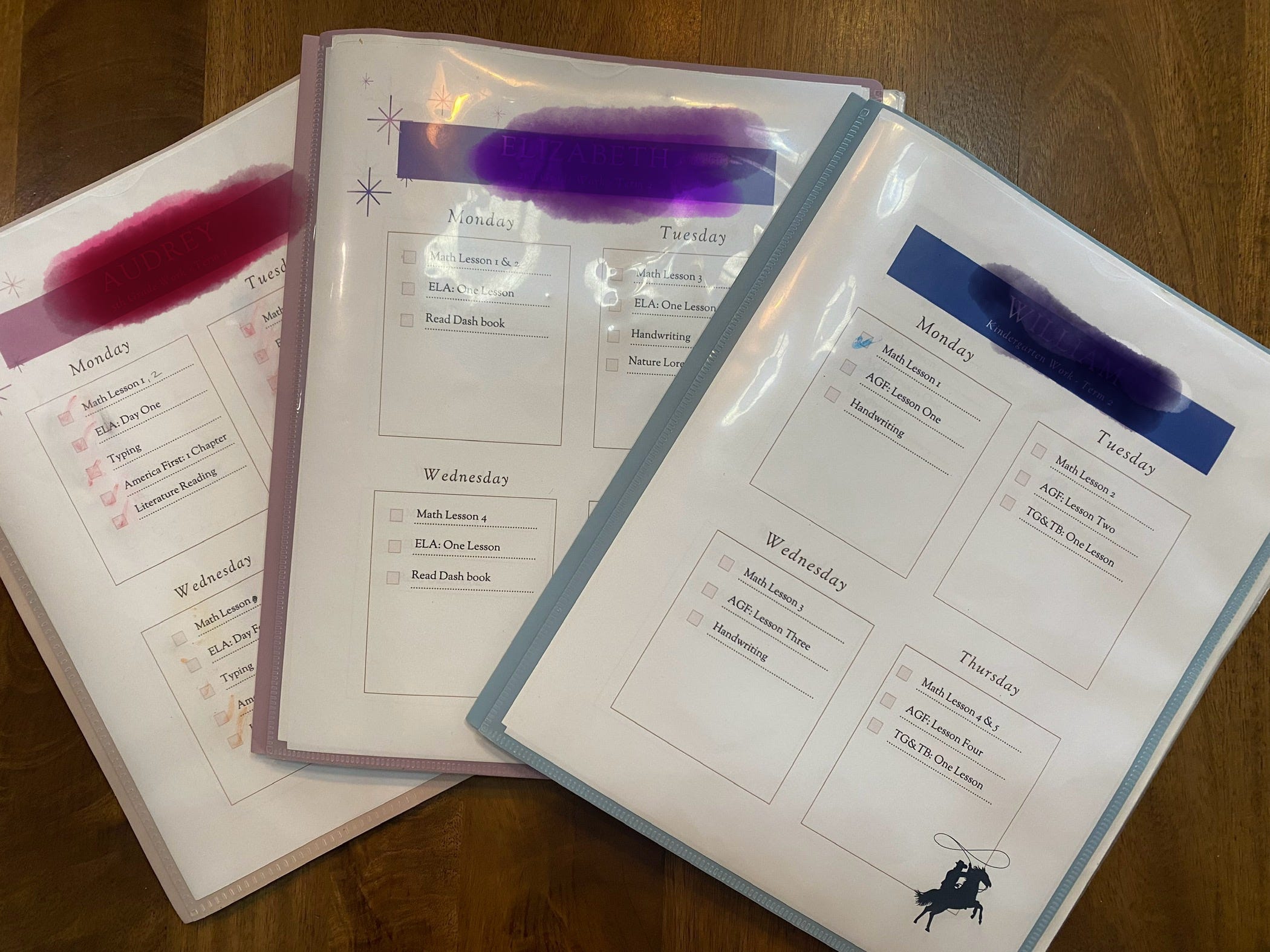
As part of your Morning Time, create a beauty block/loop. This section includes simple, short, and beautiful subjects such as Art Study, Composer Study, Poetry and Recitation, Fables and Tales, and Habit Training.
Include a section in your homeschool planner for your “Office Hours”. This is a time to make appointments, make copies, grade, and maybe do a little reading.
Write your agenda on the board. Kids love to see what they will be doing during the day.
Your planner is for family and core subjects. Subjects such as math and English language arts can be given to them independently.
Notebooking 101
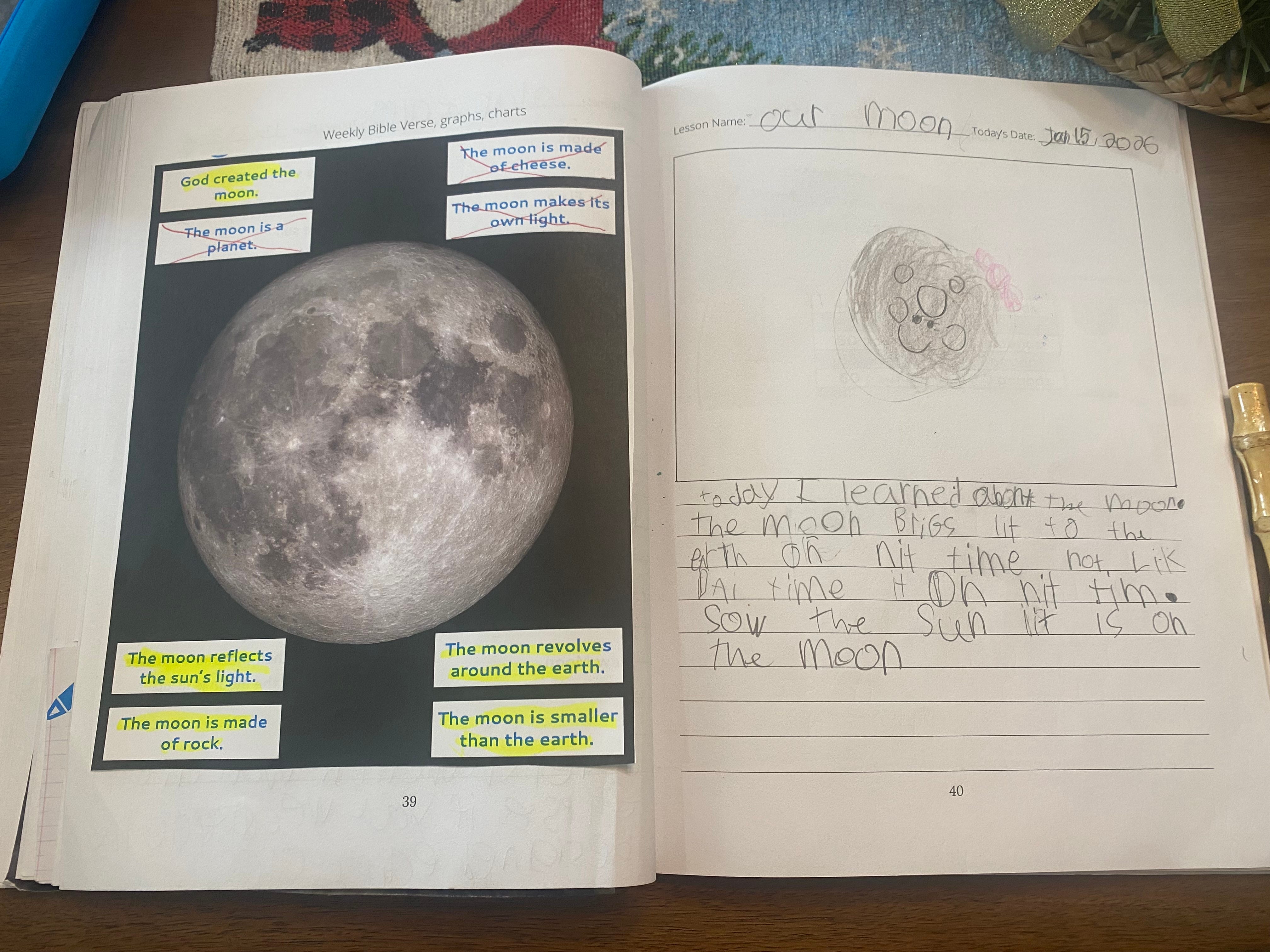
What is the Living Notebooking Method?
The Living Notebooking Method is the name I gave, based on the common term "notebooking" in the homeschool world and on the instruction I learned as a high school teacher from the Teacher’s Curriculum Institute. The method is as follows
Right-hand side: The right-hand side is for INPUT. This means the information that we are gathering from the lesson. This includes: copywork, narration, and the illustration.
Left-hand side: The left-hand side is for OUTPUT. Whatever information is included in the is informaiton that goes beyond the lesson. This includes charts, maps, and more.
Both sides are important for telling the whole story and for the student to share what he or she has learned.
The Mother’s Corner
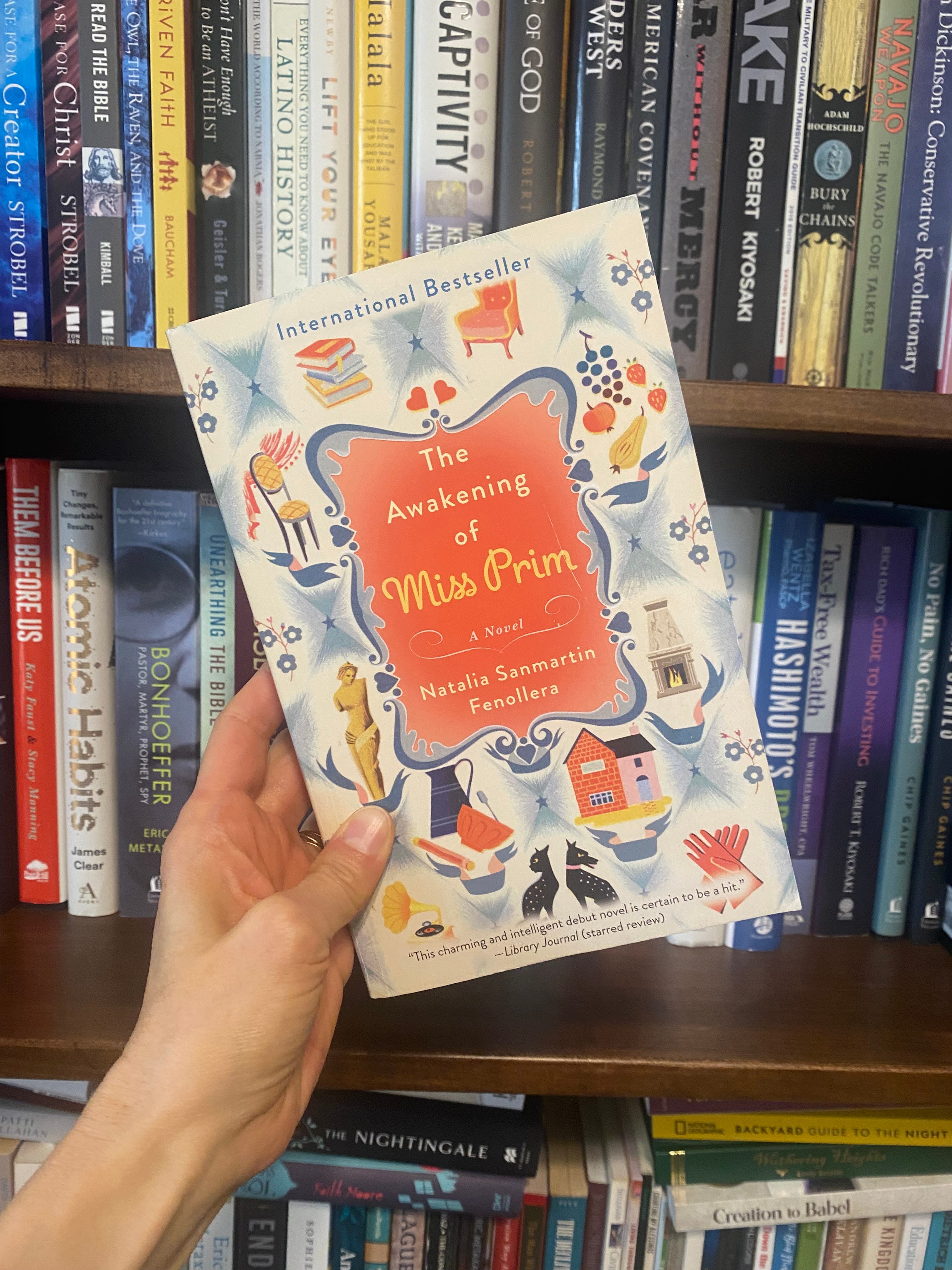
This month, I finished reading Awakening of Miss Prim by Natalia Sanmartin Fenollera. It was a delightful read. Miss Prim is a librarian with modern views on the world, who is struck by her boss’s way of living and by the way he educates his nieces and nephews. The book is filled with thoughtful quotes worth commonplacing.
“The world, lamented Purdencia Prim, had lost its taste for beauty, harmony, and balance.” p. 8 (I wholeheartedly agree with Prudencia here.)
“An attractive, refined woman is a work of art, her father had always said.” p. 83 (That’s why I believe in always dressing well.)
“…in a way we are a product of our own reading.” p. 154 (That’s why it’s good to read good books, not just trendy books.)
“They’re. being brought up with good books so that later they can absorb great books.” p. 155 (So Charlotte Mason!)
“You can fool children for a time, but we adults mostly don’t realize when the period of grace has expired.” p. 159 (Very true. It happened to all of us with our parents.)
“If two people admire each other, they’re not equals. If they were, they wouldn’t admire each other. They’re different as each admires in the other what they don’t find in themselves. It’s difference, not similarity, that fosters admiration between two people.” p.177 (That’s why opposites attract!)
“… sometimes you need to have a cry, bit its’ good not to cry over just anything.” p. 202 (I agree.)
“No,” he said firmly, “no kiss. Never give kisses. I hate them.” “I think you’ll get over that too when you’re grown up.” p. 203 (This quote reminded me of my son.)
This was a lovely book, and I was intrigued about how it would fold out. I love the way Miss Prim evolves in the book.
P.S. Check out the resources I’ve put to gether to help you simplify, organize, and beautify your homeschool.
Follow me on Instagram for more tips on notebooking, mother culture, and homeschooling.
Explore my Notebooking Catalog for interactive notebooks, exam books, and more tools that I have created for mother-teachers.
Explore my Amazon Storefront for my favorite books and homeschool resources.
*** Links above are to affiliate links for the book recommendation.***